A cracked, chipped, or heavily decayed tooth usually leads to the same question at the dental chair: does this need a crown, or will a filling do the job? Both are common, well understood ways to rebuild a damaged tooth, and both can last for years when they are matched to the right situation. The choice is rarely about which one is simply better. It comes down to how much healthy tooth structure is left, where the damage sits, and how much biting force that tooth has to absorb every day.
At our Bedford, MA practice, we walk patients through both options using digital imaging so the decision is based on what is actually happening inside the tooth rather than guesswork. Here is how we think through the crown versus filling question, and what usually tips the scale one way or the other.
What a Filling Is Designed to Do
Once a cavity is located, treatment options include a filling, a crown, or a root canal procedure, depending on how far the decay has spread. A filling places restorative material directly into the tooth while you are in the chair. The material is shaped and hardened on the spot, which makes fillings fast, conservative, and generally the least invasive way to repair a tooth.
Tooth-colored fillings are the standard choice for most small and moderate cavities because they blend with the natural shade of the tooth. The key requirement for a successful filling is that the tooth still has enough solid structure around it to support the material. A filling restores the missing part of the tooth. It does not strengthen the walls that are still standing.
What a Crown Is Designed to Do
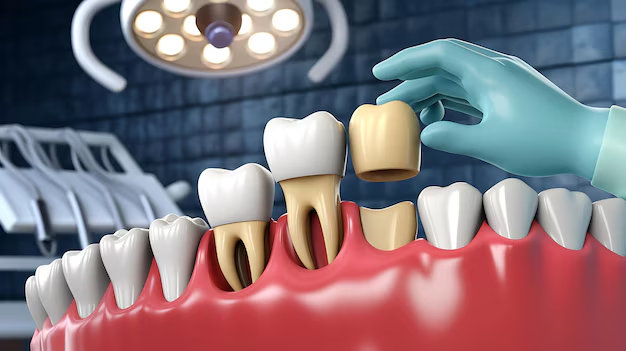
A dental crown acts like a protective cap that completely covers and reinforces the tooth from all sides. Instead of filling a space, a crown rebuilds the entire visible portion of the tooth. Your dentist may recommend a crown if you have a severely decayed, cracked, or otherwise damaged tooth that would be difficult to correct with just a filling.
Crowns are one of the most common types of dental restorations. They cover the tooth to lower the risk of infection, and they hold a weakened tooth together rather than simply plugging a hole. Damaged and missing teeth are far more common than many people assume. Roughly 15 million people in the United States have crown or bridge replacements, which says something about how often a tooth needs more than a patch.
The Structural Difference That Drives the Decision
The most practical difference is direction. A filling is placed into the tooth, while a crown is fabricated away from your mouth and then fitted over the tooth like a shell. That distinction matters because a tooth that has lost multiple walls, or that flexes under pressure, cannot be held together by material sitting in the middle of it. Force travels through a weakened tooth and tends to open cracks further. A crown wraps the whole structure and spreads biting pressure across the entire surface.
Partial Crowns: The Middle Ground
Not every damaged tooth needs the full coverage of a crown, and not every tooth can be saved with a straightforward filling. A partial crown, also called an inlay or onlay, is a type of dental restoration usually done for teeth that do not require a dental crown but are too damaged for a dental filling. It covers part of the chewing surface rather than the whole tooth, which preserves more natural structure while still protecting the areas that have been damaged.
When a Filling Is Usually Enough
Fillings tend to be the right answer in situations like these:
- The cavity is small to moderate and contained within the tooth.
- Damage is limited to one surface or a single corner.
- The tooth is not cracked through or split.
- Enough healthy walls remain to hold the filling material securely.
- The tooth does not carry a heavy share of your chewing load.
In these cases, removing less tooth structure is a real advantage. Every restoration removes some natural tooth, and a filling keeps that loss to a minimum.
When a Crown Is Usually the Better Choice
A crown becomes the more sensible option when the tooth can no longer support a filling on its own:
- Decay is extensive and reaches deep into the tooth.
- The tooth is cracked, and the crack may extend below the gumline.
- A previous filling was large, leaving thin, unsupported walls.
- The tooth has already had root canal treatment.
- The tooth needs protection from every side, not just where the damage is.
Choosing a filling for a tooth that needs full coverage often leads to a predictable outcome, which is that the tooth breaks, and the next repair is bigger and more costly than the original crown would have been.
Root Canal Treated Teeth and the Case for Coverage
Teeth that have had root canal treatment deserve special mention. In teeth with root canal fillings, crowns can prevent breakage. A tooth that has been treated this way no longer has the internal tissue that once kept it resilient, and it can fracture under normal chewing. Covering it protects the investment you have already made in saving the tooth.
When There Is Not Enough Tooth Left for a Crown
Sometimes the problem is the opposite of too little coverage. If decay or a fracture extends below the gumline, there may not be enough of the tooth exposed to seat a crown properly. Crown lengthening exposes more of the natural tooth by reshaping or recontouring bone and gum tissue. This treatment can be performed on a single tooth or on several teeth, depending on what the case requires. It is often a step taken before the final restoration rather than an alternative to it.
Material Choices Affect the Outcome
Once a crown is the right call, the material still has to be chosen. Porcelain, metal, and porcelain-fused-to-metal sit at different points on the same trade-off: how the crown looks, how it ages at the gumline, how it treats the tooth opposite it, and what it costs. A dental crown has two jobs at once. It has to rebuild a tooth that decay, damage, or wear has weakened, and it has to hold up under years of biting force. You can read a closer comparison in our article on porcelain vs metal crowns in Bedford, MA.
How Digital Scanning Fits Into the Process
Because a crown is fabricated away from your mouth, accuracy in the preparation stage matters a great deal. Our office uses digital scanning instead of traditional impression trays, which gives the lab a precise model of the prepared tooth and the surrounding bite. Digital imaging also makes it easier to show you the fracture line, the depth of the decay, or the thin remaining wall that makes a filling a poor bet. Seeing the image on screen usually answers the crown versus filling question faster than any explanation.
What About Cost
Cost is a fair part of this decision, and it varies based on the material selected, the lab work involved, and whether other steps such as root canal treatment or crown lengthening are needed first. Insurance coverage also differs from plan to plan. We do not publish a single price because a single price would not reflect most cases. Instead, we review a written treatment plan with you before anything begins, so you know what is recommended and what it involves. If you want to confirm coverage ahead of time, your dental insurance carrier can provide a predetermination for the recommended treatment.
Questions Worth Asking Before You Decide
If you are unsure which restoration makes sense, these questions tend to surface the real answer:
- How much healthy tooth structure is left above the gumline?
- Is there a visible crack, and how deep does it go?
- Would an inlay or onlay handle this instead of a full crown?
- What is likely to happen if we place a filling and it fails?
- Does this tooth carry a heavy chewing load?
- What will my insurance cover, and what will I owe?
A dentist should be able to answer each of these with the images in front of you. If the reasoning is not clear, ask again until it is.
Existing Crowns and Fillings Can Be Replaced
This decision is not only for new damage. Old restorations wear out, leak at the margins, or simply no longer match the teeth around them. We replace existing crowns and fillings with restorations that look and feel like your natural teeth. Where damage to a person’s teeth is extreme, other restorative options enter the conversation, but for most single damaged teeth the question returns to the same two choices.
Frequently Asked Questions
Is a crown always better than a filling?
No. A crown covers and reinforces a tooth from all sides, which is why it suits severely decayed or cracked teeth. But a crown also removes more natural tooth structure, so a healthy tooth with a small cavity is better served by a filling. The right answer depends on how much sound tooth remains.
Can I ask my dentist for a filling instead of a crown?
You can always ask, and you should expect a clear explanation of the recommendation. If a tooth has lost too much structure or contains a crack that flexes under pressure, a filling may not hold, and the tooth could break later. Ask what the risk is in your specific case.
How does a dentist decide between the two?
The decision rests on the extent of the decay, whether a crack is present, how much healthy tooth structure remains, and whether the tooth has already had root canal treatment. Imaging shows these details directly. Teeth with root canal fillings are often crowned specifically to prevent breakage.
What is a partial crown?
A partial crown, known as an inlay or onlay, is a restoration usually done for teeth that do not require a full dental crown but are too damaged for a filling. It restores part of the chewing surface while leaving more of the natural tooth intact than a full crown would.
Why would a root canal treated tooth need a crown?
After root canal treatment, a tooth is more prone to fracture under normal biting force. A crown covers the tooth completely and holds it together, which lowers the chance of breakage and protects the work already done to save it. Fillings alone often cannot provide that same support.