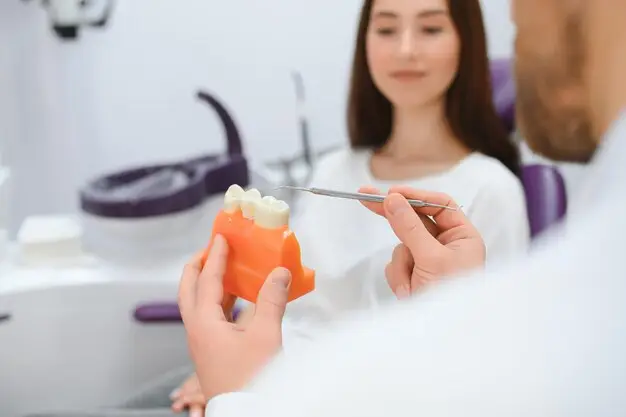

Losing most or all of the teeth along one or both arches can make everyday moments feel difficult. Smiling, chewing a meal, or speaking clearly can become sources of frustration instead of normal routines. Many patients begin with traditional dentures and run into familiar problems: slipping, adhesives, and foods they no longer feel comfortable eating. Dental implants have changed how complete arch tooth loss is treated. For patients in Bedford, MA, the two options that come up most often are implant-retained dentures and full mouth implants. Both rely on dental implants, yet each works differently. Knowing the difference can help you make a confident decision for your smile.
What Are Implant-Retained Dentures?
Implant-retained dentures, also called implant-supported dentures or overdentures, are a functional upgrade for people who need to replace a complete arch of missing teeth. Instead of resting only on the gum tissue like a traditional denture, an implant-retained denture is stabilized by two or more dental implants placed in the jawbone. The denture snaps securely onto those implants, giving it all-day stability. There is no slipping and no need for adhesives. For many patients, this makes implant-retained dentures a secure, comfortable alternative to traditional removable dentures.
The difference in daily function is significant. Implant-supported dentures restore about 60% of dental function. For someone who has spent years avoiding certain foods or worrying about a denture shifting mid-sentence, that improvement changes everyday life. Implant dentures are described by dental professionals as the best way to replace complete arches of missing teeth because they combine the familiarity of a denture with the strength of implant support.
Understanding Full Mouth Implants
Full mouth implants take a fixed approach to the same goal: replacing all the teeth in one or both jaws. Where an implant-retained denture can be snapped on and off by the patient, a full mouth implant restoration is designed to stay in place. The goal is a stable bite and a natural appearance, so the finished smile feels as close to natural teeth as possible.
At Bedford Dental, full mouth reconstruction combines implant dentistry with restorative care to rebuild a complete smile. The focus is on giving patients a bite that works well, a smile that looks natural, and the freedom to eat, speak, and laugh without hesitation.
Every patient is different. The right approach depends on factors such as bone density, gum health, the condition of any remaining teeth, and personal preference. Some patients value the ability to remove and clean their restoration. Others prefer a fixed result that never comes out. A thorough evaluation is the best way to determine which direction makes sense.
How the Two Options Compare
Both implant-retained dentures and full mouth implants share a common foundation: dental implants. In both cases, the implants provide the stability that traditional dentures cannot offer. That stability is what allows patients to chew with superior power and to speak clearly without worrying that their teeth will move.
The main difference is whether the finished restoration is removable. Implant-retained dentures snap onto the implants and can be taken out by the patient. Full mouth implant restorations are fixed in place. This distinction matters even more for the lower arch. Lower dentures typically have little to no retention on their own, which is why implants are so often used to secure loose full dentures.
Your dentist can explain the practical differences in detail, including how each option feels, how it is cared for, and which one better suits your lifestyle.
Why Traditional Dentures Often Leave Patients Frustrated
Traditional dentures have helped millions of people, but they are not without drawbacks. Many patients become frustrated with their limitations, especially as the denture loosens over time. Even a well-made denture can slip during eating or speaking, and adhesives become a daily hassle. The lower arch is a particular problem. Because lower dentures sit on a relatively small ridge of bone, they often have little to no retention and can feel unstable no matter how well they fit.
Implants address the root of the problem. By anchoring the denture to the jawbone, implants give the restoration a stable foundation. This is why implant-supported options are recommended for people who want more than what a traditional denture can provide.
The Benefits of Implant-Supported Restorations
Patients across Massachusetts have chosen implant-supported care for several clear reasons:
- No slipping. Snap-on dentures anchored by implants stay in place all day. No adhesives are needed, and there is no worry about the denture moving at the wrong moment.
- Better chewing power. Securing a denture to implants allows patients to chew with superior force compared with traditional dentures.
- Long-term value. With proper care, implant-retained dentures can last for decades, making them a lasting investment in daily comfort.
- A natural look. Implant-supported dentures are designed to achieve a natural tooth look, restoring both the function and the beauty of the smile.
- Renewed confidence. Regaining comfort, function, and confidence is often the most noticeable benefit. Smiling, eating, and speaking return to being ordinary, enjoyable parts of life.
Are You a Candidate?
Many people who have lost all their teeth along one or both arches are candidates for implant-supported care. Even patients who already wear full dentures may be able to upgrade. Implants can be used to secure loose full dentures, particularly lower dentures, which have the hardest time staying in place on their own.
The first step is a consultation. Your dentist will examine your mouth, review your health history, and listen to your goals. Not everyone is a candidate for every option, and the right path depends on your individual situation. A conversation with a dental team experienced in implant restorations is the best way to get clear answers.

Implant-Retained Dentures in Bedford, MA
Residents of Bedford, MA, and nearby communities have access to advanced restorative care. Bedford Dental provides general, cosmetic, and restorative dentistry, including dental implants and full mouth reconstruction. The practice serves families from Bedford and surrounding towns such as Lexington, Burlington, Billerica, and Reading, with a focus on advanced technology, patient comfort, and personalized treatment plans.
If you are tired of dealing with a loose denture, if you have lost most of your teeth, or if you are simply exploring your options for the future, an evaluation is a good starting point. Your dentist can explain the differences between implant-retained dentures and full mouth implants and help you decide which path fits your oral health and your lifestyle.
Frequently Asked Questions
Here are answers to common questions about implant-retained dentures and full mouth implants in Bedford, MA.
How many dental implants are needed for an implant-retained denture?
An implant-retained denture is stabilized by two or more dental implants. The exact number depends on the condition of your jawbone and the design of the restoration. Some patients need more support than others. Your dentist will determine the right number during your consultation, based on a clinical exam and imaging, so the final plan is tailored to your anatomy.
Can implant-retained dentures be removed?
Yes. Implant-retained dentures are designed to snap onto implants, which means the patient can take them out. That feature is what makes them a secure but still removable alternative to traditional dentures. Full mouth implant restorations, by contrast, are fixed and stay in place. Your dentist can walk you through the daily care routine for whichever option you choose.
How long do implant-retained dentures last?
With proper care, implant-retained dentures can last for decades. The implants integrate with the jawbone for long-term stability, and the restoration is designed to handle the demands of daily chewing. Routine dental visits and good home care are important for protecting the investment. Your dentist will provide specific instructions on how to care for your restoration over the years.
Can implants be used to secure my current loose denture?
In many cases, yes. Dental implants can be used to secure loose full dentures, especially lower dentures that have little to no retention. Your dentist will need to evaluate the condition and fit of your existing denture to see whether it can be connected to implants or whether a new restoration would be a better choice. An exam will provide the answer.
How do I choose between implant-retained dentures and full mouth implants?
The choice comes down to your oral health, bone structure, and personal preferences. Implant-retained dentures offer a removable option with strong, all-day stability. Full mouth implant restorations provide a fixed result. A consultation with an experienced dental team is the best way to compare both paths for your specific situation and receive a clear recommendation.